A biome isa classification of an area based on climate, geography,rainfall, adaptations of vegetation, animals in the area, and many other factors. The larger and more abundant biomes include temperate grasslands, deserts, forests, savannas, tundras, and several others. Each biome is unique and differ from the others greatly.
If you could live in any biome as an animal, what would it be?
Written by Lion
Information from: http://www.blueplanetbiomes.org/world_biomes.htm Picture from: http://www.bio.miami.edu/ecosummer/lectures/biomes.jpg
What the temperate grasslands? Describe what makes temperate grasslands unique (temperature, sunlight, humidity, rain fall, and any other things that characterize temperate grasslands.) Describe the degree of biodiversity in the temperate grasslands. Temperate grasslands are biomes that is primarily covered by grasses and shrubs. The temperate grasslands have mixed temperatures. During the summer, temperatures rise above 90 degrees. During the winter, however, temperatures reach below 0 degrees. Temperate grasslands receive around 10-20 inches of rainfall per year, preventing trees from growing. Temperate grasslands are also prone to fires usually caused by lightning. This affects the biodiversity of the area. The biodiversity of temperate grasslands is mid to mid high. The biome contains many species of animals, and several hundred other types of grasses. However, many kinds of species are located only in a specific continent, so not all grasslands have the same animals or kinds of animals.
What else do you think the lack of rain could cause?
Written by Lion
Information from: http://www.runet.edu/~swoodwar/CLASSES/GEOG235/biomes/tempgrass/tempgras.html http://www.thewildclassroom.com/biomes/grasslands.html Picture from: http://www.runet.edu/~swoodwar/CLASSES/GEOG235/biomes/tempgrass/grasslnd.gif
What is a real world example of temperate grasslands?
The Emin Valley Steppe is an example of a real world temperate grassland. The Emin Valley Steppe is located in China and Kazakhstan, which are two countries in Asia. The Emin Valley Steppe (or EVS for short) contains two shallow saline lakes which are home to two endangered birds; the dalmatian pelican and the relict gull. The lakes are located on the western part of the EVS. Also located on the western part of the grasslands is a habitat for several endangered animals; ibex and saiga antelopes, snow leopards and wolves.
The Emin Valley Steppe itself is endangered as well. The EVS contains many valuable minerals and fossil fuels.
Why do you think the dalmatian pelican and the relict gull could be endangered?
What should I find at the temperate grasslands? Describe what I would see if I was walking through the temperate grasslands?
If you were dropped in the middle of the temperate grasslands, you would be basically be put into a large field scattered with grass and and a few flowers. The grasslands are generally flat with a possible mountain bordering it. There is a possibility of encountering a fire caused by lightning in certain places.
Animals also inhabit the area. You would see antelopes, gray wolves, and other animals wandering around.
Why do you think temperate grasslands are more prone to fires caused by lightning than the town you live in?
Describe two kinds of plants that are common or unique in the temperate grasslands. What do they do? What is their role in the temperate grasslands? How have they adapted to survive in the temperate grasslands?
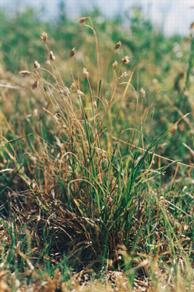
Buffalo grass is a perennial grassabout 2-5 inches tall. It's stem is circular and hollow with green, curly leaves sprouting from the top. Buffalograss come in both male and female. The grass has roots that can reach five feet below the ground. Buffalo grass is commonly used in turf-areas.
Buffalo grass is very important in the temperate grasslands as well as many other areas. Buffalo grass is the main source of food to many animals such as livestock, prairie dogs, buffalo (hence the name buffalo), and white tailed deer. Without the buffalo grass in the environment, many animals would have a much harder time finding food, reducing themselves in number. Those animals' predators would also lose their main or an important food source, also reducing themselves in number. In the worst case scenario, all of the animals could die, ruining the community.
Buffalo grass have adapted to the temperate grasslands by keeping their growing parts under the ground. By doing this, the overall plant is protected from forest fires and lightning.
Have you ever seen buffalo grass in turf-areas or elsewhere?
Written by Bomi
Information from: http://biology.about.com/od/landbiomes/a/aa042106a.htm http://www.blueplanetbiomes.org/buffalo_grass.htm Pictures from: (in chronological order) http://media-2.web.britannica.com/eb-media/56/6956-004-0B3F03D5.jpg http://www.blueplanetbiomes.org/images/buffalo_grass.jpg
Describe two kinds of plants that are common or unique in the temperate grasslands. What do they do? What is their role in the temperate grasslands? How have they adapted to survive in the temperate grasslands? Purple needle grasses are medium to large sized (up to 2 feet tall) grasses that are made up of tiny bracts and the stamens and pistil. Purple needle grassis a perennial plant, so it lives for more than two years.They're wind pollinated,so they don't need insects to pollinate them.
Purple needle grass is eaten by rabbits, and other small animals. Without them in the temperate grasslands, the food chain of that area could be disturbed or even completely eradicated.
One adaptation that purple needle grass has to help it survive in the temperate grasslands is it's roots; purple needle grass's roots are up to 16 feet long. The extra length in roots are helpful to gather extra water. Since the temperate grasslands receive low precipitation, the 16 feet is extremely helpful. Another adaptation that purple needle has to help it survive in the temperate grasslands are in it's roots; the roots hold moisture. Not only does this help the plant survive through times without rain, but it allows the plant to be extremely difficult to burn.
Why do you think it would be helpful to the plant that it's harder to burn than regular plants?
Written by Bomi
Information from: http://www.sacsplash.org/plants/naspul.htm http://www.moremesa.org/mesa_np_needle.htm
Pictures from: (in chronological order) http://www.moremesa.org/garden/needletop.jpg http://www.sacsplash.org/pimages/naspul.jpg
Describe two kinds of animals that are common or unique in the temperate grasslands. If you'd like, make each plant a separate post. What do they do? What is their role in this biome? How have they adapted to survive in this biome? Add a photo or video of each.
Many gray wolves can be located in the temperate grasslands. Gray wolves are the largest part of the dog family. Wolves' physical characteristics vary greatly-- much like antelopes, many parts of their body can be found to be changed in other species of wolves. Gray wolves' fur can be anywhere from black to red depending lightly on age, location, and pack. Gray wolves, as well as other wolves, are at the top of the food chain.
Gray wolves are at the top of the food chain. Without gray wolves, many animals would over populate the area. With an excess amount of animals in the area, their prey decreases, messing up the natural balance of animals. Many animals could become extinct because of this, and the biodiversity of the area would lower. Gray wolves are crucial to the temperate grasslands.
Gray wolves have also adapted in various ways. Gray wolves' wooly fur provides insulation during long winters. The gray wolves' fur contains long guard hair to repel moisture. Their senses are also very strong; gray wolves' sense of hearing are twenty times stronger than humans', and their sense of smelling are one hundred times stronger than humans'. This would help themselves catch their prey (perhaps the nimble antelope) in a more efficient manner.
Why do you think gray wolves chose to live in temperate grasslands?
Written by Bomi
Below is a video clip of gray wolves.
Information from: http://en.wikipedia.org/wiki/Gray_Wolf http://nationalzoo.si.edu/Animals/NorthAmerica/Facts/fact-graywolf.cfm http://www.blueplanetbiomes.org/gray_wolf.htm http://www.nsrl.ttu.edu/TMOT1/canilupu.htm
Pictures from: (in chronological order) http://en.wikipedia.org/wiki/File:Canis_lupus_signatus_crop.jpg http://www.ri.net/schools/West_Warwick/manateeproject/grassland/images/wolf.jpg
Video from: http://www.youtube.com/watch?v=BDTOMRGsgq8
Describe two kinds of animals that are common or unique in the temperate grasslands. If you'd like, make each plant a separate post. What do they do? What is their role in this biome? How have they adapted to survive in this biome? Add a photo or video of each.
Many species of Antelopes dwell in the temperate grasslands. They come in many varieties of colors, shapesand sizes; antelopes' hornscan be curved, spiraled, straight, and etc, and their fur can be any color from gray to orange. Antelopes are herbivores, so they consume only plants. They eat twigs, bark, fruits, herbs, and various other plants.
Antelopes in temperate grasslands are in the lower area of the food chain. They're in the lower area of the food chain because of the fact that they're herbivores. Without them in the biome, lions, leopards, wild dogs, and other animals would lose their main or secondary food supply.
Antelopes have adapted to survive in various ways. Antelopes have keen hearing and sight to help them avoid their predators. Since antelopes are hunted by many animals, this adaptation helps benefits them enormously. Another example of an adaptation by antelopes is their running speed. Antelopes run at an extremely fast pace to avoid predators. Adaptations can also be divided by species. For example, Gerenuks can walk on their hind legs to help them reach high areas.
Why do you think antelopes live in the temperate grasslands?
Written by Bomi
Below is a short video clip showing the antelope in its natural habitat.
Information from: http://www.enchantedlearning.com/subjects/mammals/antelope/Antelopecoloring.shtml http://www.planet-pets.com/plntanlp.htm http://en.wikipedia.org/wiki/Antelope Picture from: (in chronological order) http://upload.wikimedia.org/wikipedia/commons/thumb/7/77/Damaliscus_lunatus.jpg/300px-Damaliscus_lunatus.jpg http://en.wikipedia.org/wiki/File:Antilope_girafe_debout.jpg Video from: http://www.youtube.com/v/FiBnf1B30rM&hl
Post a map (photo) showing the geographical regions where the temperate grasslands is found. Describe the temperate grasslands. Why are the temperate grasslands located in the those particular regions around the globe?Why? (Temperate grasslands are shaded in black.)
Temperate Grasslands are large green open grass (open grasslands) on a field. Temperate grasslands contain very few trees. Temperatures in the temperate grasslands are unstable. In summer, temperatures reach above 90 degrees, while winter temperatures stretch below 0 degrees. Also, temperate grasslands receive low precipitation (10-20 inches). Temperate grasslands are largely found in North America, and Asia. Smaller sections of temperate grasslands can be found in the corners of Australia, Africa and South America, and various other places.
Temperate Grasslands are generally located in areas with colder (or more temperate) climates. They are located in these particular regions around the globe to support the environment. The environment contains animals accustomed to living in all seasons.
What does the location of temperate grasslands tell you about the climate?
Written by Bomi and Lion
Information from:
Temperate Grasslands, by Ben Hoare
(Hoare, Ben. Temperate Grasslands. Austin: The Brown Reference Group plc, 2003. Print.)
“What is a grassland?” Tom asks to the open factories all around him. The wind blows at his face, and his eyes close, afraid of what will happen. “What the heck is this?” Tom shouts. Sadly no one is around him. Tom rubs his eyes and sees grass east, west, south, and north of him. It would take at least a century to make it out of the land. Tom kneels down and sobs. Three things were bothering him. 1. He felt like he was in the center of millions of grass. No factories. 2. He lost his family. 3. He didn’t know which way he should walk to make it out alive. A large circle formed in front of Tom as a moose in a suit appears. This aesthetic looking moose, had the nicest glasses, suit, shoes, and tie. “Welcome to the temperate grasslands,” the moose exclaimed. Suddenly, out of the green grass, rabbits, deer, horses, and other animals appeared. There were small animals like the rabbits, and there were large animals like the lion. Tom suddenly felt assured. “Food,” Tom shouted in joy, as he jumped for his first rabbit. Out of nowhere, a fox ran and caught the rabbit. “NO! I don’t like the sound of this,” Tom growled. “It’s a simple food chain,” the moose in a suit said as he chewed on his food. “The rabbit eats grass, and the fox eats the rabbit. Watch carefully. Soon, the lion will eat the fox.” Blood spurted across the grass, leaving red marks on the tips. The fox was dead, and the lion smiled. Tom ran to the nearest tree. Using a rock and a stick, Tom fabricated a spear. “Die you mean creature!” The spear ran up the lion’s neck. Tom started a fire, and roasted the lion’s flesh. Although it was dark, the grass and plains looked beautiful. It was like heaven. Tom and the moose look at the wonderful scene. By morning Tom left early to hunt animals. When Tom came back, the moose asked. “Guess who’s back?” Tom laughed, and the moose grinned. “Moose.” Tom’s blood gushed out of his body, as Moose ate his flesh.
This blog is about the biome, temperate grasslands. The blogposts are written by Bomi and Lion. This is for the Biome Blog Project in Mr. Kelly's period 8/9 science class.